How to Become a Thought Leader in Your Niche
So, you want to be a thought leader.
Let's get one thing straight. It’s not about knowing everything. It’s about being brave enough to ask good questions and nice enough to share what you find.
It’s how you become the go-to person for something—the one people trust, not because you’re perfect, but because you’re real.
What It Really Means to Be a Thought Leader
A thought leader doesn't just say what everyone else is saying. They’re the ones who look at things differently. They ask, "Why do we do it this way?" and show people new, better ways.

Think of yourself as a guide, not a teacher.
- You make people curious by asking cool questions.
- You share what you've learned from your own life—the good stuff and the mistakes.
- You give helpful tips that people can actually use.
- You build trust by just being yourself, again and again.
Instead of just telling people what to do, you help them see things in a whole new light. That’s what makes your ideas stick. You’re inviting them to talk with you, not just shouting at them.
And it’s a two-way street! You have to listen just as much as you talk. When you answer comments and listen to what people say, it shows you really care about them.
Real Stories Make It Click
Big, fancy ideas are easy to forget. But real stories? People remember those.
Think about the little moments that changed things in a big way.
- Maybe it was Sarah, a boss who asked, "What's one tiny thing we could change?" and suddenly found a super-fast new way to get work done.
- Or it could be Miguel, a helper who told a story about a project that failed. By sharing his mistake, he got more trust from his clients than any success story ever did.
This whole journey is built on small, steady steps. Every article you write, every comment you answer, makes you a little more trusted. It's this slow and steady pace that builds a group of people who love what you do, not some random video that goes viral.
The best thought leaders feel like real people. They say when they don't know something and are open about what they're learning. That kind of honesty is like a magnet.
Ready to start building that for yourself? Let’s do this.
Why Trusted Voices Win
The world is a noisy place. People just want clear answers from someone they can trust. And the numbers show it's true.
Get this: 52% of bosses around the world spend at least an hour every week reading ideas from thought leaders. Even cooler, 60% said they would pay more to work with a company that has great, smart ideas. You can find more thought leadership influence findings from this research.
Your stories show you know your stuff. When you explain exactly how you solved a tricky problem, you connect your ideas to real-life wins. That’s how you go from being just another voice to being the person with the answers that actually work.
Here’s a quick peek at the building blocks we'll use. This is the simple plan for everything we're about to do.
Your Thought Leadership Blueprint
| Pillar | What It Means for You | Why It Matters |
|---|---|---|
| Niche Clarity | Pick one special thing you love to talk about. | It’s how people can hear you in a crowded room. |
| Signature Content | Make a special kind of blog post or video that is totally you. | This makes people come back for more, like a favorite TV show. |
| Strategic Outreach | Share your ideas with the right people in the right places. | Great ideas don't help anyone if they're a secret. |
| Credibility Signals | Show off good things people say about you or stories of your success. | This is what helps people trust you right away. |
This plan gives you a strong start. It’s not about being famous; it’s about being super helpful to a small group of people.
A thought leader isn’t someone with all the answers but someone brave enough to ask the right questions.
With that in mind, let’s figure out how to find your special voice and a spot where you can really help people.
Find Your Unique Niche and Voice
You can’t be the expert on everything. I've seen so many smart people try. They try to know everything about a dozen topics, and they end up not being an expert in any of them. The big secret to becoming a thought leader is to think smaller, not bigger.

Your power comes from owning a tiny, special corner of your world. What’s that one thing you could talk about all day, even if no one was paying you? What problem gets you excited to fix?
That's your sweet spot. It’s where what you love meets what people really need.
Go an Inch Wide and a Mile Deep
Being a jack-of-all-trades is okay, but thought leaders are specialists. They dig super deep into one thing and become the person everyone trusts for that one thing.
Let's say you're a marketing person. "Marketing" is huge! But what if you only helped local coffee shops get more customers by holding fun events? Now that's a special spot.
- You're not just another marketer.
- You are the person for coffee shop parties.
- You know their problems, their customers, and what really works for them, down to the smallest detail.
When you get this specific, you stop trying to beat everyone and start being in a league of your own. Your advice is suddenly way more helpful because it's not for everyone; it's perfectly made for a certain group.
Listen More Than You Talk
So, how do you find those problems people are dying to solve? Easy. You listen. You become a detective, looking for your audience's headaches.
Don't just guess what's bothering them. Go find out for real.
- Hang out in Online Groups: Spend time in places like LinkedIn groups or Reddit where your people are. What questions do they ask over and over?
- Read the Reviews: Look at reviews for books or tools in your field. The complaints people have are like treasure maps to great ideas.
- Talk to People: Have real chats. Ask old clients or friends, "What's the most annoying part of your day when it comes to [your topic]?"
When you really get their problems, your words will feel like you're reading their minds. That’s how you build a real friendship that's about more than just sharing facts. It shows you care enough to pay attention.
Becoming a thought leader isn't about being the loudest person. It’s about having the most helpful and different voice in one special conversation.
This is where being yourself is your superpower. You're not just repeating stuff everyone knows; you’re giving a new idea based on what you've been through. And that's what leaders are looking for. Did you know 49% of top bosses want new ideas from thought leaders, and 43% of buyers love stuff that shows you're a deep expert on one topic? You can see more about what buyers want from thought leadership content.
What Makes Your Voice Unique
Your niche is what you talk about. Your voice is how you talk about it. It’s your personality, your stories, and your unique way of seeing things.
Please, don't try to sound like a boring robot. People like people.
Think about what makes you, you:
- Your "Earned Secrets": These are the lessons you learned the hard way—from your wins, and even more, from your mess-ups. A story about a project that went wrong is often way more helpful than one about a perfect project.
- Your Analogies and Metaphors: How do you explain hard stuff? Do you use examples from sports, or cooking, or movies? This is part of your special style.
- Your Unpopular Opinions: Do you disagree with a popular idea in your field? A smart, different point of view can make people stop and think. Just make sure you can explain why you think that way.
Your voice is what makes someone read your article instead of the hundred others on the same thing. It’s the human touch that builds trust and turns people who just read your stuff into real fans. Don't hide it—it’s your best tool.
Develop Your Signature Content System
https://www.youtube.com/embed/O8yf49h0Ass
Your best ideas need a place to live. Once you know your special topic, the next step is to build a simple, easy way to share what you know. This is your content plan—a way to show up and be helpful, week after week.
Don't worry. This isn't about being a full-time YouTuber or trying to use every new app. Actually, doing less is almost always better.
The goal is to find one or two ways of sharing your ideas that feel easy and fun for you and really connect with the people you want to help. The secret isn't to be everywhere; it's to be super valuable in just a few key spots.
Choose Your Content Playground
How do you like to share ideas? Are you a great writer? Do you love explaining things on a whiteboard? Maybe you're awesome at just talking about a topic. The best way for you to make content will always be the way that feels most natural.
Pick one or two main ways to share your stuff and go all in. You can always add more later, but starting small is the best way to not get tired and quit.
- For the Writers: Writing articles on LinkedIn or your own blog is perfect. You can explain things really well, and it helps people find you on Google over time.
- For the Talkers: A podcast or short videos (like on LinkedIn or YouTube Shorts) could be your thing. It's a great way to let your personality shine.
- For the Visual Thinkers: Simple pictures with words, slide shows for LinkedIn, or even cool drawings can make tricky ideas super easy to understand and share.
The key here is to be yourself. If you hate being on camera, making videos will feel awful for you and look weird to everyone else. If writing feels like a chore, maybe a podcast is better. People can feel your energy—or when you don't have any.
The Power of Pillar Content
Okay, here’s a trick that will save you a crazy amount of time: Pillar Content. It’s the best way to make a ton of good stuff without feeling like you're running on a treadmill.
The idea is super simple. You make one big, awesome piece of content—your "pillar." Then, you chop that pillar up into lots of smaller, bite-sized pieces for different places online.
It’s like cooking a big turkey for a holiday dinner. You get a great meal that night, but you also get leftovers for sandwiches all week, soup from the bones, and maybe even a casserole. One big effort, lots of meals.
Your pillar content is the main dish. It's the big idea, the deep story, the ultimate guide. Everything else you make for a while can be a little taste of that same big meal.
This makes all your stuff feel connected and keeps reminding people of your main message. It makes you look super focused and smart, which is what a real thought leader does.
Putting Pillar Content into Action
Let’s try a real example. Imagine you help teams that work from home talk to each other better.
Your pillar content could be a long, detailed blog post called, "The Ultimate Guide to Talking When You're Not in the Same Room."
From that one big article, you can make a whole month's worth of stuff:
- Five LinkedIn Posts: Each post takes one key tip from the guide. One day you post about "The 3 Best Tools for Working From Home," and a few days later you share "How to Have Meetings That Don't Waste Time."
- A Short Video Series: You could film three quick 90-second videos. In one, you just explain what it means to work "asynchronously." In another, you tell a personal story about a time when communication went wrong. In the third, you give one super-helpful tip.
- An Email Newsletter: Your weekly email can talk about one part of the guide—maybe the part about setting clear rules—and then link back to the full article for people who want to learn more.
- A LinkedIn Carousel: Turn the main steps from your guide into a little slideshow people can swipe through. People love these and share them a lot.
- A Podcast Outline: The sections of your blog post are a perfect outline for a 20-minute podcast. You can use the time to explain more about the "why" behind your advice.
See how that works? You did the hard part once when you made the big article. Now, you’re just serving up those same ideas in different, fun ways. This is how you build your name and stay on people's minds without getting burned out. It’s the smartest way to show up and share what you know.
Get Your Message Out There and Build Your Tribe
Look, making amazing content is a huge win. You should feel great about that. But it's only half the job. A great idea that nobody sees is just a secret. Now it’s time to get your ideas in front of the right people, start some fun conversations, and build a group of people who actually want to hear from you.
This isn't about shouting your message at everyone and hoping it goes viral. It's about being a helpful part of the conversations that are already happening. Think of it less like giving a speech and more like joining a really interesting chat at a party.
Give More Than You Take on LinkedIn
LinkedIn is not just for your resume or for posting links. It's like the main street for professionals. If you want to be a thought leader, you have to treat it that way.
Don't be the person who just logs on, drops a link, and leaves. That’s like walking into a party, yelling "READ MY BLOG," and then walking right out. It's weird and it doesn't work.
Your job is to be helpful to others long before you ask them for anything.
- Comment with purpose. Find the popular people in your field and leave smart comments on their posts. Don't just type "Great post!" That's boring. Add to the chat. Ask a good question, share a story from your life that fits, or offer a slightly different idea.
- Share other people's cool stuff. When you find an article or a post that is really helpful, share it. And here's the trick: tag the person who made it and say exactly why you loved it. This shows you're a good source of ideas, not just someone who talks about themselves.
Doing this over and over is how you build friendships and trust. People will start to know your name and think of you as someone with smart things to say. So, when it's your turn to share something, they'll be way more likely to listen because you've already shown you're there to help.
Your goal isn't just to be seen; it's to be seen as super helpful. By being nice and sharing other people's stuff, you build up goodwill that makes people want to listen when you finally have something to say.
Stop Broadcasting and Start a Conversation
The real magic happens when you stop talking at people and start talking with them. Everything you post should be the start of a conversation, not the end of it. Think of each post as an invitation for others to share their own ideas.
When someone takes the time to comment on your stuff, it's a gift. Say thank you. Answer every single comment you can, even if it's just, "Thanks for sharing your thoughts on this." Even better, ask them a question back to show you're really listening. This simple thing is what turns quiet readers into a real community.
This isn't just a nice thing to do; it's good for business. Companies are realizing how powerful this is. In fact, B2B companies spent 53% more on thought leadership in 2024. Why? Because 75% of bosses said they looked into products they'd never even heard of before, just because they saw some really smart ideas from that company. You can learn more from these thought leadership statistics and their impact on business.
Go Where Your People Are
Where do your people hang out online when they have a problem? They’re probably in special LinkedIn Groups, private chats, or old-school forums. You need to be there, too—not to sell things, but to be a helpful expert.
Pick a few of these groups and just listen for a week or two. Get a feel for the place.
- Look for the same questions. What problems do people talk about over and over again?
- Offer help, not a sales pitch. When a question pops up that you can answer, give a clear, simple, and helpful answer right in the comments.
- Share your stuff only when it's the perfect answer. If you've written a guide that perfectly solves the problem someone just asked about, then it's okay to share the link. But say it right: "Hey, I actually wrote a whole guide on this. Hope it helps you out."
This isn't about spamming groups with your links. It's about becoming part of a community and being known as a trusted helper. Do this enough, and people will start coming to you for answers. You'll get a reputation as the go-to person for your topic. And that's how you stop chasing people and start building a loyal group that grows all by itself.
Your First 90 Days as a Thought Leader
Okay, let's get real. Forget the big, confusing ideas for a second. Becoming a thought leader is about taking small, steady steps, not one giant jump. This is your simple, easy plan for the next three months. No fluff, just things you can actually do.
We’re going to break it down into three 30-day chunks. Each part has a clear goal, so you can build up steam without feeling like you have to do everything at once. Think of it like laying one brick at a time to build a strong house.
Month 1: The Foundation Phase (Days 1-30)
Your first month is all about getting ready. Before you can have people over for a party, you need to clean up and make sure the place looks nice. This is the prep work that makes everything else work.
The main goal here is clarity. You need to be super clear on who you are, who you're helping, and what you're talking about. You're not making content yet; you're getting the garden ready before you plant the seeds.
Here's your simple checklist for the first 30 days:
- Pick Your Niche: Be very, very specific. Not just "marketing," but "helping local coffee shops with fun parties." Write down your niche in one clear sentence.
- Fix Up Your LinkedIn Profile: Your profile isn't a resume; it's like your own personal website. Change your headline to show your niche. Make sure your summary tells a story about the problems you solve, not just the jobs you've had.
- Find 10-15 Key People: Find the people who are already leading the chat in your niche. Follow them. Look at what they post. See what their audience loves. Don't copy them, just learn from them.
- Join Two Relevant Groups: Find two LinkedIn Groups or online places where your people hang out. Don't post anything yet. Just listen and learn.
This part can feel slow, I know. But it's the most important part. Getting this right saves you from wasting months making stuff for the wrong people about the wrong things.
Month 2: The Creation Phase (Days 31-60)
Now that your foundation is strong, it’s time to start building. This month is all about making and sharing your very first pieces of content. The key here is to be consistent, not perfect.
Your goal is to get into a good rhythm of making helpful stuff and getting used to sharing your voice. It's like starting a car engine and letting it run for a bit.
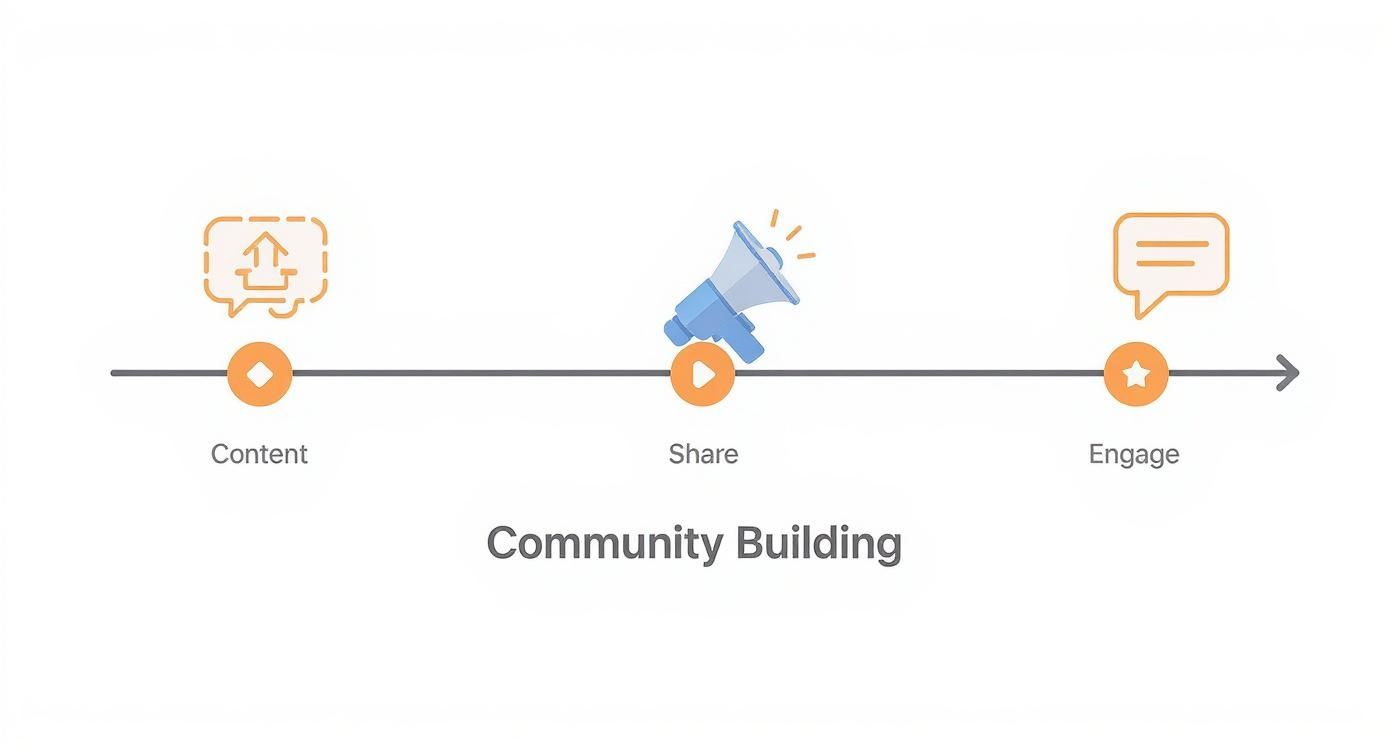
This picture is a great reminder that making stuff is just the first step. The real fun happens when you share it and start a conversation.
Here are your to-do items for the second 30 days:
- Create Your First Pillar Post: Write one big article (around 1,500 words) that talks all about a big problem in your niche. This will be your well of ideas for the whole month.
- Publish 8-10 LinkedIn Posts: Chop up that big article into smaller, fun-sized tips. Share two or three posts each week. Don't just post links; write the post right there on LinkedIn.
- Talk to Others Daily: Spend 15 minutes every day leaving nice comments on posts from those key people you found last month. Join the conversation.
- Reply to Every Comment: When someone comments on your post, answer them. Say hi, thank them, and ask them a question back. This is how a community starts.
Your goal for this month isn't to get famous. It's to prove to yourself and your small group of followers that you can show up every week with good ideas.
Month 3: The Momentum Phase (Days 61-90)
You've done the prep work and started making things. Now, it's time to get things moving. This last 30-day push is about getting your message out there more, making real friends, and turning your early work into a habit that sticks.
The focus here is chatting and connecting. You’re moving from just posting stuff to actually building a little community around your ideas. You're becoming a known voice in your tiny corner of the world.
Here’s your plan to get things rolling:
- Reach Out to One Friend: Find one other person in your niche who is at about the same level as you. Say hi. Maybe you can share each other's stuff or just have a chat to share ideas.
- Be Active in Your Groups: Start answering questions in those two groups you joined. Be helpful. Give your ideas without trying to sell anything.
- Look at Your Content: Look back at the posts from Month 2. Which ones did people like the most? What topics got people talking? Use that info to plan your next big article.
- Ask Your People a Question: Post a simple question on LinkedIn asking your followers about their biggest problem. This shows you're listening and gives you a ton of ideas for new stuff to make.
This whole thing is about taking small, smart steps. To make it even easier, I've made a quick checklist you can use.
Your 90-Day Quick-Start Plan
| Timeframe | Your Main Focus | Action Items to Complete |
|---|---|---|
| Days 1-30 | Foundation & Clarity |
|
| Days 31-60 | Creation & Consistency |
|
| Days 61-90 | Momentum & Connection |
|
By the end of these 90 days, you won't be a world-famous thought leader. That's not the point. But you will have built a strong start, a good habit of making content, and the beginning of a real community.
You'll have stopped just thinking about it and started actually doing it. And that's the most important step of all.
Got Questions? Let's Clear Them Up.
Starting this can feel a little scary. Lots of questions come up, and sometimes, the biggest problems are just in our heads. It's totally normal to feel unsure.
Let's talk about some of the most common worries people have when they decide to share what they know. Getting past that doubt is the first real step.
"How Much Do I Really Need to Know?"
This is a big one. Feeling like a fake is real. Lots of super smart people think they need to be the #1 expert in the entire world before they can say anything. That’s just not true.
You don't need to know everything. You just need to be one step ahead of the people you're trying to help. Your job isn't to be a perfect genius; it's to be a helpful guide.
Think of it this way: if you've finished a hard project or solved a tricky problem, you have valuable secrets. Someone who is just starting out would love to know how you did it. Your experience, with all its mistakes, is your expertise.
"But What if I Have Nothing New to Say?"
It can feel like everything has already been said a thousand times. But here’s a secret I've learned: it’s not about saying something that has never been said before. It’s about saying it in your special voice.
The way you see things is the secret sauce. Nobody else has your exact mix of experiences.
- Your personal stories make ideas feel real.
- Your examples make hard things easy to understand.
- Your specific stories show that your ideas work.
No one else has had your exact life. That means no one else can share what you’ve learned in the same way. That’s your strength, not a weakness.
Your goal isn't to invent a brand new topic. It's to add your own special flavor to a conversation that's already happening, making it more fun and helpful for your people.
"How Long Does This Actually Take?"
Let's be real: this is a marathon, not a race. It’s the opposite of going viral. You’re building trust, and trust takes time. There's no magic button.
But, you can often see small, happy signs pretty quickly if you stick with it.
- In 30-45 days: You'll probably see more people liking and commenting on your posts as you find your groove.
- In 60-90 days: You might notice people starting to mention your ideas or ask you questions. This is when things really start to build on each other.
The key is to just keep going. Showing up every week with helpful ideas is what makes things happen. Every post, every comment, and every chat is another brick you lay for your reputation. Be patient, focus on being truly helpful, and good things will happen.
Ready to turn your expertise into real authority? Authority Echo is your partner in building a powerful presence. We help you get recognized as the "best answer" where it matters most, creating a system that turns your insights into a steady stream of inbound leads and opportunities. Start with a free visibility audit to see where you stand.