A Guide to Inbound Marketing for Your Small Business
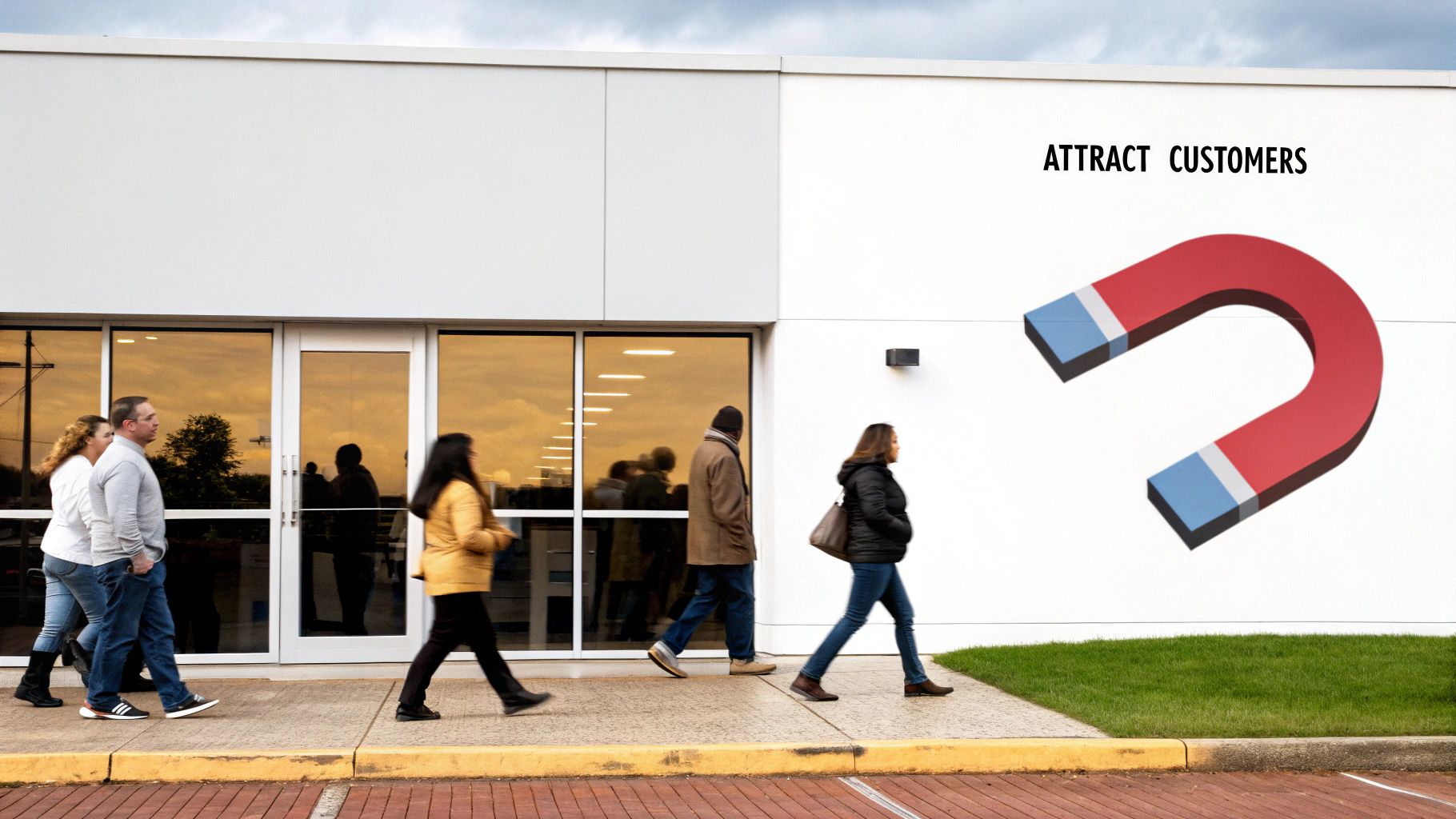
Stop chasing customers. What if they could find you? That's what inbound marketing is all about! For a small business, this is a really big deal. It’s like being a magnet. You make helpful stuff, and the right people come right to you.
Why Inbound Marketing Is So Cool
Think about old marketing. It's like yelling with a megaphone. You buy ads or call people you don't know. You just hope someone listens. It’s loud and kind of annoying, right? You're bugging people.
Inbound marketing is the total opposite. Instead of yelling at people, you pull them in. How? By being super helpful.
When you have a question, where do you go? Google! The businesses that show up with good, clear answers are doing inbound marketing. They aren't bugging you; they're helping you right when you need help.
A Magnet is Better Than a Megaphone
The big idea is super simple but it works so well. Old marketing chases people. Inbound marketing brings them to you.
It's like getting a phone call from a stranger during dinner (that's old marketing) versus finding a blog post that solves a problem you've been stuck on for weeks (that's inbound!). Which one makes you feel better? Which one makes you trust the company more?
For a small business, this is everything. You stop wasting money shouting at people who don't care. Instead, you put your energy into becoming a trusted helper for people who are already looking for what you do.
Inbound marketing is about making friends, not just getting names. It’s a long-game that builds real trust and turns strangers into happy customers, and happy customers into your biggest fans.
It also saves a lot of money! The helpful stuff you make—like blog posts or videos—works for you all day, every day. It's awesome. In fact, companies that do this save about $14 for every new person they connect with compared to the old ways.
And get this—after just five months of doing it, the cost can go down by 80%. You can learn more about these inbound marketing savings and see how it can help you.
Quick Guide: Inbound vs. Outbound
To make it super easy, here’s a quick chart. It shows the big difference between being a magnet and being a megaphone.
| What it is | Inbound Marketing (Magnet) | Outbound Marketing (Megaphone) |
|---|---|---|
| Main Goal | Pull people in with helpful stuff. | Yell your message out to everyone. |
| How you talk | It's a two-way chat. You listen and help. | It's a one-way speech. You talk, they might listen. |
| How people feel | "They get me!" | "They're bugging me." |
| What you use | Blogs, Google search, social media, guides. | TV ads, cold calls, big signs, junk mail. |
| How you spend | You make things that last and grow. | You have to keep paying for ads to be seen. |
Basically, inbound helps you build something that lasts, all powered by trust. Outbound is like you're just renting people's attention for a little while.
Find Out Who You're Talking To
Okay, before you write a single word, you have to answer the biggest question ever: who are you even talking to?
If you don't know, you're just talking to nobody. This is where awesome inbound marketing starts. Not with the cool stuff, but with the people.
You have to know your perfect customer. I don't just mean how old they are. I mean, what makes them happy? What makes them sad? Think about it: you wouldn't sell cat toys to a dog owner. It’s the same thing here. When you know who you're helping, everything you make will feel like it was made just for them.
This is all about making a buyer persona. Don't worry, it's not a scary word. It's just making up a pretend person who is your perfect customer. Give them a name! It makes it so much easier to talk to them.
Go Deeper Than Just the Basics
So, how do you make this person? You have to dig a little deeper. Knowing their age is okay, but the real good stuff is understanding what’s going on in their head.
What worries them? What problems do they have every day that they just can't fix? What do they really want to do? Finding these problems is the key. In fact, companies that really know their customers do 2.2 times better with getting business.
A buyer persona is not just a list of facts; it’s a story. It’s the story of the person you are here to help, and you are their guide to winning.
Let's pretend you're an accountant. A normal way is to say you help "small business owners." But a better way is to get specific.
- Meet "Stressed-Out Steve." He owns a small construction company with five workers. He's great at building things, but numbers make his brain hurt. He's always worried he's doing his money stuff wrong and is scared of getting in trouble. What does he want most? To feel like he's in control of his money so he can go back to building his business.
See? Big difference. Now you're not just selling "accounting help." You're selling Steve a good night's sleep.
How to Find the Real Answers
Guess what? You don't have to guess! Just go ask your customers. The best ideas come from the people you already help.
Here are some easy ways to find out what they think:
- Talk to Your Favorite Customers: Just call them up! Ask them what life was like before they found you and what's better now.
- Read Online Reviews: Look at your reviews and your competitors' reviews. What problems do people keep talking about? Those are big clues.
- Go Where They Go Online: Where do your customers hang out online? Maybe it's a Facebook Group or on Reddit. See what problems they talk about using their own words.
Once you have some ideas, just make a simple page about them. It's not a big report. It's a simple tool. Start with just one person, like Steve. Get to know him really well. From now on, every time you make something, just ask yourself, "Would Stressed-Out Steve find this helpful?" If the answer is yes, you're doing it right.
Make Helpful Stuff People Want
You figured out who you're talking to. Awesome! Now it’s time to make the stuff they actually want to read or watch. This is where inbound marketing gets really fun for a small business.
Here's the big change in how you think: Stop selling. Start helping.
I'm serious. Forget about your sales pitch. Put yourself in your customer's shoes again. What are the top questions they are typing into Google before they even think about buying something? Your job is to make the best, simplest answers to those questions.
When you keep showing up with good advice, you start to build trust. People see you as the expert who totally gets it. Your website stops being a boring ad and becomes a helpful library that's open 24/7.
Think of Ideas that Fix Real Problems
Staring at a blank screen is tough. But you already have tons of ideas from when you made your customer persona! Just think about their problems.
Let's go back to "Stressed-Out Steve," the construction guy. What's bothering him?
- He's probably thinking, "Am I tracking my job costs the right way?"
- He might be searching for, "Easy bookkeeping tips for builders."
- He could even be looking for, "When should I hire an accountant for my small building company?"
Bam! Every one of those questions is a perfect idea for a blog post, a short video, or a simple checklist. The trick is to stop thinking about what you want to sell. Start thinking about what they need to fix. Your best ideas will always come from your customers' biggest headaches.
The best stuff you can make doesn't shout about how awesome you are. It quietly shows you're an expert by fixing a small part of your customer's problem for free.
This way of doing things just works. It helps people right where they are. In fact, 72% of businesses get more leads when they make this kind of helpful stuff. You're not interrupting their day; you're helping them find an answer.
Pick the Right Way to Share (Hint: Keep It Simple)
You don't need a huge budget or to be a professional writer to make great stuff. The best way to share is the one you can do over and over again and that your people will actually look at.
For a small business, simple is almost always better. My advice? Pick one or two of these and get really good at them.
- Simple Blog Posts: This is the superstar of inbound marketing. A simple blog post that answers one question is super powerful. Just use short sentences, clear titles, and lists so people can read it easily.
- Printable Checklists: People love checklists. You can take a blog post like "5 Things to Do Before You Hire Your First Worker" and turn it into a one-page paper. It's so helpful and super easy to make.
- Short Videos on Your Phone: No fancy camera needed. Just set up your phone, hit record, and spend two minutes answering one customer question. It's real, it's you, and it's perfect for social media.
The goal is to be helpful, not perfect. A shaky video with a great tip is way better than a fancy video that says nothing. As a small business owner, just being you is your superpower. Use it!
Simple SEO to Help Google Find You
Making great stuff is half the job. The other half is making sure people can find it. This is where Search Engine Optimization (SEO) comes in. I promise it’s not scary. You just need to know the basics.
Think of SEO like leaving little clues for Google to follow to your helpful stuff. The biggest step is to talk like your customer talks.
Back to Steve. He isn't searching for "fancy accounting services." He's searching for "bookkeeping help for contractors." That phrase? That's your keyword.
Here’s a simple checklist:
- One Big Keyword for Each Post: Don't try to be everything. Focus each post on answering one question with one main keyword.
- Use Your Keyword Normally: Put your keyword in your title, in the first few sentences, and a few other times. It should sound like a person wrote it, not a robot.
- Think About Other Questions: What's the next thing Steve might ask? Maybe "QuickBooks for construction" or "how to pay workers." Talking about these things tells Google your post is extra helpful.
By using real words and being truly helpful, you're already way ahead of others. This simple way of doing inbound marketing for small business makes sure that when your perfect customer has a problem, you're right there with the answer.
Turn Visitors Into Real People
Getting people to your website is great, but it's only the first step. A visitor doesn't pay your bills. The really cool part is when you turn that person who clicked into a real person you can talk to.
This is where you build little bridges from your helpful stuff to a real conversation. You're not tricking them; you're offering them a hand. It's about starting a friendship, and the best way to do that is to give them something useful in exchange for their email.
This whole idea of swapping something good for an email address is what makes inbound marketing for small business really work. It’s when a person looking around raises their hand and says, “Hey, I want to hear more from you.”
This little picture shows the process: from having an idea to getting it out there for people to see.
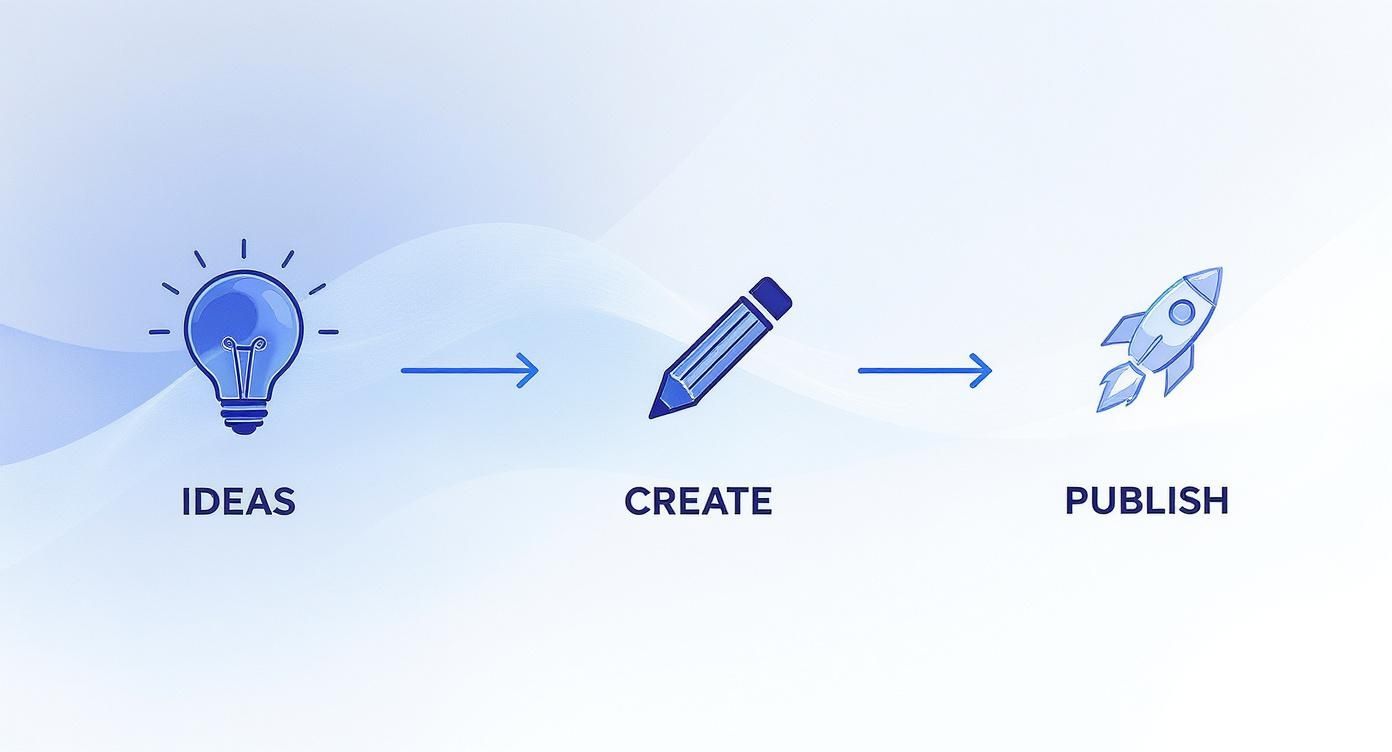
It's a good reminder that getting leads starts with good ideas, then making something cool, and finally sharing it with the right people.
Making Your First "Lead Magnet"
A lead magnet is just a fancy name for a free thing you give away for an email. It doesn't need to be a giant book. In fact, for a small business, the more focused and helpful it is right away, the better.
The most important thing is that it must solve a problem for your perfect customer. Remember "Stressed-Out Steve," our builder? He doesn't want a long guide about business. He wants something that will make his life easier right now.
Here are a few easy lead magnet ideas you could make this week:
- A One-Page Checklist: Make a simple "Builder's End-of-Month Money Checklist." It's one page, super useful, and fixes a real problem.
- A Simple Template: Offer a basic "Job Costing Spreadsheet" for Google Sheets. It gives him a tool he can use today.
- A Quick Guide: A short PDF about "5 Tax Breaks Most Builders Miss." This is good info that helps his wallet.
Your best lead magnet is a small, quick win for your customer. It should give them a little taste of how you can help, which makes them want to hear more from you.
The goal isn't to fix all their problems at once. It's to show you get their problem. When someone downloads your checklist and it actually helps, you've just built a lot of trust.
Making it Easy for People to Talk to You
Once you have a great lead magnet, you need a super easy way for people to get it. This is where buttons and forms come in. A button might say something like "Download Your Free Checklist."
That button should go to a simple landing page. This is just a clean page with one job: get someone to fill out the form. Don't put other stuff on it. Just quickly explain why the freebie is great and have a short form for their name and email.
You also need to make it crazy easy for people who are ready to talk to you right now to get in touch.
- Simple Contact Forms: Make sure your website has a clear contact form. Only ask for what you need: name, email, and a message. Nobody wants to fill out a giant form just to ask a question.
- Booking Links: If you sell a service, a booking link is amazing. Tools like Calendly let people see when you're free and book a call right on your calendar. This stops all the back-and-forth emails and catches them when they are most interested. In fact, 72% of businesses say this kind of helpful stuff gets them more leads.
By putting these simple bridges on your website, you build a system that works for you all the time. You'll never miss a chance to talk to a potential customer again.
Build Friendships with Simple Automation
Someone just downloaded your cool checklist. Yay! But what happens now? If you have to send a welcome email to every single person yourself, you'll run out of time. Fast.
As a small business owner, you can't be everywhere at once. And you don't have to be.
Automation is your secret helper for building friendships with lots of people, even when you're sleeping. We're talking about setting up simple, automatic emails that keep the conversation going. These aren't the annoying sales emails everyone hates. Think of them as a few friendly, helpful messages that build trust and keep you on their mind.
This way of doing things gently helps people along. You're being a helpful friend, not a pushy salesperson, until they are ready to talk more.
What is an Email Nurture Sequence?
An email nurture sequence is just a bunch of emails you write ahead of time that get sent out automatically. When someone gets your freebie, they get the first email. A few days later, they get the next one. And it keeps going.
The whole point is to stay helpful. You're not just sending emails that say "buy my stuff!" You’re sharing more good tips, telling stories they can relate to, and showing them you understand their life. It’s like having a friendly chat over a few weeks.
This is a huge deal for small businesses because it lets you build trust with many people at once. And the numbers prove it works. Email marketing is one of the best ways to do inbound. For every $1 you spend, you get about $40 back.
When you make the emails a little personal, like using their first name, you can make 5.7 times more money. This makes sense because 64% of people would rather talk to businesses through email anyway. You can find more cool facts in these small business marketing statistics.
By setting this up one time, you make a system that works 24/7. Every new person feels special without you having to do anything for each one.
Your First Simple Nurture Sequence
Let's make this real. You don't need a huge, 20-email series to start. A simple 3 to 5-email plan over the first month is perfect.
Let’s go back to "Stressed-Out Steve," the builder. Imagine he just got your "Builder's Bookkeeping Checklist." Here’s what his automatic email journey could look like:
Email 1 (Right Away): The "Here's Your Thing!" Email. This one is super simple. It gives him the checklist he wanted, says thank you, and reminds him who you are. The goal is to be fast and helpful.
Email 2 (3 Days Later): The "Did You Know?" Email. Share a quick, related tip. For Steve, it could be an email called "The #1 Mistake Builders Make with Receipts." It’s just helpful, with no selling.
Email 3 (7 Days Later): The "I Get It" Email. Share a short story about another builder you helped. Show you understand their problems, like how annoying job costing is. This is how you make a real, human connection.
Email 4 (14 Days Later): The "Helpful Resource" Email. Send a link to one of your best blog posts or a quick video that solves another one of his problems. You're showing him that you're the expert to trust.
Email 5 (30 Days Later): The "Soft Offer" Email. This is the first time you gently ask if he wants more help. You could offer a free, no-pressure 15-minute chat to look at his bookkeeping. It’s a helpful offer, not a hard sell.
The magic of a good email series is that it makes buying from you feel like the next normal step in a helpful chat, not a surprise sales pitch.
Here's a simple timeline you can use for your first email series.
Sample 30-Day Email Nurture Sequence
| Day | Email Topic | Goal |
|---|---|---|
| Day 1 | Give them the freebie + Welcome | Give them what they asked for right away; build trust. |
| Day 3 | Quick, helpful tip | Give more help; show you're an expert. |
| Day 7 | A story they can relate to | Make an emotional connection; show you understand. |
| Day 14 | Link to another helpful thing | Show you're the person to go to for help. |
| Day 30 | Gentle offer (like a 15-min chat) | Suggest a small, easy next step. |
This whole thing is automatic. You write the emails one time, set them up in a tool like Mailchimp or ConvertKit, and it runs forever. Every "Stressed-Out Steve" who joins your list gets the same helpful, trust-building experience.
This is exactly how inbound marketing for small business turns an email address into a future happy customer—all by being helpful first.
Check the Results That Really Matter
Okay, you've done the work and built your inbound marketing machine. So… is it working? It's really easy to get lost looking at tons of numbers and charts that don't actually tell you anything about your business.
Let's just keep it simple.
For a small business, success is not complicated. It's not about how many people liked your post or how many people visited your website on Tuesday. It's about how many of the right people raised their hand and said, "Hey, I'm interested in what you do."
Looking at your inbound marketing numbers is about focusing on the few things that actually help you make money. We're talking about real business growth, not just numbers that look nice.
From Clicks to Chats
First, you need to see how people are finding you. Is your helpful stuff actually bringing people in from Google? This is your organic traffic—the people who find you without you paying for ads. Seeing this number go up every month is the first sign that your content is working.
But traffic is just the beginning. The real good stuff happens when those visitors decide to do something.
This is where leads come in. A lead is just someone who trusts you enough to give you their email, usually for a helpful checklist or guide you made. Watching how many new leads you get each month tells you if your freebies are something people really want.
The most important question isn't "How many people saw my stuff?" It's "How many of the right people did something that could lead to a sale?" That's what it's all about.
The Only Numbers That Pay the Bills
At the end of the day, leads are great, but you can't pay your bills with email addresses. You have to know how many of those leads are turning into real conversations with people who might buy from you. This is the real test for all your hard work.
Forget everything else for a minute and just look at these two numbers:
Qualified Leads: These aren't just any people. These are your "Stressed-Out Steves"—people who are your perfect customers. They have the exact problem you can fix.
Booked Calls or Appointments: This is it. The big one. How many people went from reading a blog post to putting a call on your calendar? This one number tells you if your whole system, from content to emails, is working together.
By focusing on these few key results, you get a super simple, clear picture of what's working so you can do more of it.
Your Inbound Marketing Questions Answered
So, you're thinking about inbound marketing for your small business, but you probably have some questions. That's totally normal. Let’s talk about the most common ones I hear.
How Long Does This Stuff Actually Take to Work?
This is always the first question, and it's a good one. Think of it like planting a garden—you won't get tomatoes overnight. Inbound marketing is a long-term plan that builds on itself. It becomes something really valuable for your business over time.
You might see some good signs in the first few months, but most businesses start seeing a real, steady stream of good leads in about 6 to 12 months of doing it regularly. It's all about building up steam that lasts.
Can I Do This If I’m Not a Writer?
Yes! A thousand times, yes! A lot of people get stuck here, but you don't have to be a great writer.
The best "content" is just you sharing what you already know in a way that feels normal to you. It’s about being an expert, not a professional writer.
If you don't like writing, don't do it. Do what you're good at instead. You could:
- Record short videos: Just use your phone and answer one common question from a customer.
- Start a simple podcast: You could talk about what you do while you're driving your car.
- Make helpful pictures: A simple checklist or drawing made in Canva can be super helpful.
The main thing is to pick something you like and just start sharing what you know.
What Is the Most Important First Step?
If you only remember one thing from this whole guide, make it this: really, really, really understand your perfect customer.
I'm serious. Everything else—the stuff you make, the emails you send, the things you offer—all of it is built on this one thing. If you don't know who you're talking to, what worries them, and what they really want, you're just guessing.
Before you write or record anything, take the time to figure out their biggest problems and goals. Once you know their world, your marketing will finally make sense.
Ready to stop guessing and start being seen as the best answer for your customers? The team at Authority Echo specializes in turning your expertise into a powerful inbound marketing engine that attracts qualified leads without ads. We help you show up where it matters most.
Discover how visible you are to AI and search right now with our free visibility audit.