Wanna Start a Technology News Letter Everyone Reads? Here's How.
A great technology newsletter is like getting a cool email from your super smart friend. You know, the one who knows all the awesome stuff happening with computers and gadgets? They send you a list of the neatest news, fun reviews, or helpful tips right to your email. It cuts through all the boring stuff so you don't have to!
What Is a Technology Newsletter Anyway?
Does it ever feel like technology is moving super, super fast? Like, wow! One day there's a new phone, and the next day there's a new app. And then there's something about AI that sounds really big, but who has time to figure it all out? It’s a lot.
And honestly? Most of the articles about it are so long. And kind of boring. They feel like homework. Nobody wants more homework.
A technology newsletter is the perfect fix! Think of it like a personal tour guide for all things tech. Instead of you having to look at a million websites, someone you trust does all the hard work. They find the most interesting, important, or just plain awesome stories and wrap them up in a friendly email. It’s not a dry old report; it’s like a chat.
More Than Just News
But it's not just about getting news. The best newsletters feel like you're part of a secret club. The person writing it shares why they're so excited about something, and it makes you feel excited, too! They help you get why something is a big deal, not just what it is.
This special feeling is why newsletters are so popular now. It's a huge thing! In just 2024, people sent an incredible 15.6 billion emails all over the world. Newsletters about tech are a big reason why, with lots of people opening them—about 34.59% of them get opened! That number shows just how much people love getting information this way. You can read more about how big newsletters are from beehiiv.com to see for yourself.
Why They Feel So Special
So, what makes a technology newsletter feel so different from just another website? It's all about the personal touch. It’s like getting a letter instead of a billboard.
A newsletter is a direct line to your reader's inbox, which is like their own personal digital room. It's a chance to build friendship and trust, one email at a time.
Here's why they work so, so well:
- They Save You Time: The person writing it digs through all the junk to bring you only the treasure.
- They Build Trust: You get to know the writer's personality, which makes you trust what they say.
- They Create a Club: It feels like you're part of a group of friends who are all into the same cool things.
Starting one is a powerful way to share what you love, help other people feel smart about tech, and become someone people listen to. You're not just sending emails; you're building a community around something awesome.
Finding Your Super Special Tech Topic
The tech world is gigantic. It's like a huge city with different neighborhoods for everything from AI that writes poems to cars that drive themselves. With so many people already talking, how do you get anyone to listen to you? The secret isn't to shout the loudest. It's to find your own little, interesting corner of the city and become the friendly person everyone there knows and trusts.
This is your unique angle. It’s the special flavor that makes your technology newsletter totally different from all the others. Think of it like your secret sauce. Maybe you're obsessed with how small teams make cool video games, or maybe you get super excited about tech that helps people with disabilities. Whatever it is, that real, genuine passion is what will make people want to listen.
You don't have to be the world's biggest expert on everything. It’s actually better if you’re not! People like to follow along with someone who is honestly curious. Your job is to pick something you truly love and invite other people to explore it with you.
Ask Yourself These Simple Questions
Finding your topic doesn't have to be hard. It’s really just about listening to what already makes you excited. Grab a piece of paper and write down the first things that pop into your head for these questions. Don't think too hard!
- What tech stuff do I read about just for fun? Is it cool drones, the newest electric cars, or how computers are learning to be creative?
- What questions do my friends always ask me about tech? Maybe you're the person they go to for advice on new laptops or how to make their smart speaker work.
- If I could only write about one piece of tech for a whole year, what would it be? This is a great way to find a topic that’s deep enough to keep you—and your readers—interested for a long time.
Answering these questions helps you find the perfect spot where what you love meets what other people want to know about. And that's where the best newsletter ideas live! That way, what you write feels real to you and super helpful to your readers.
And the possibilities are huge. Just look at the numbers for newsletters—it’s obvious that a focused, good newsletter can build a group of people who really, really care.
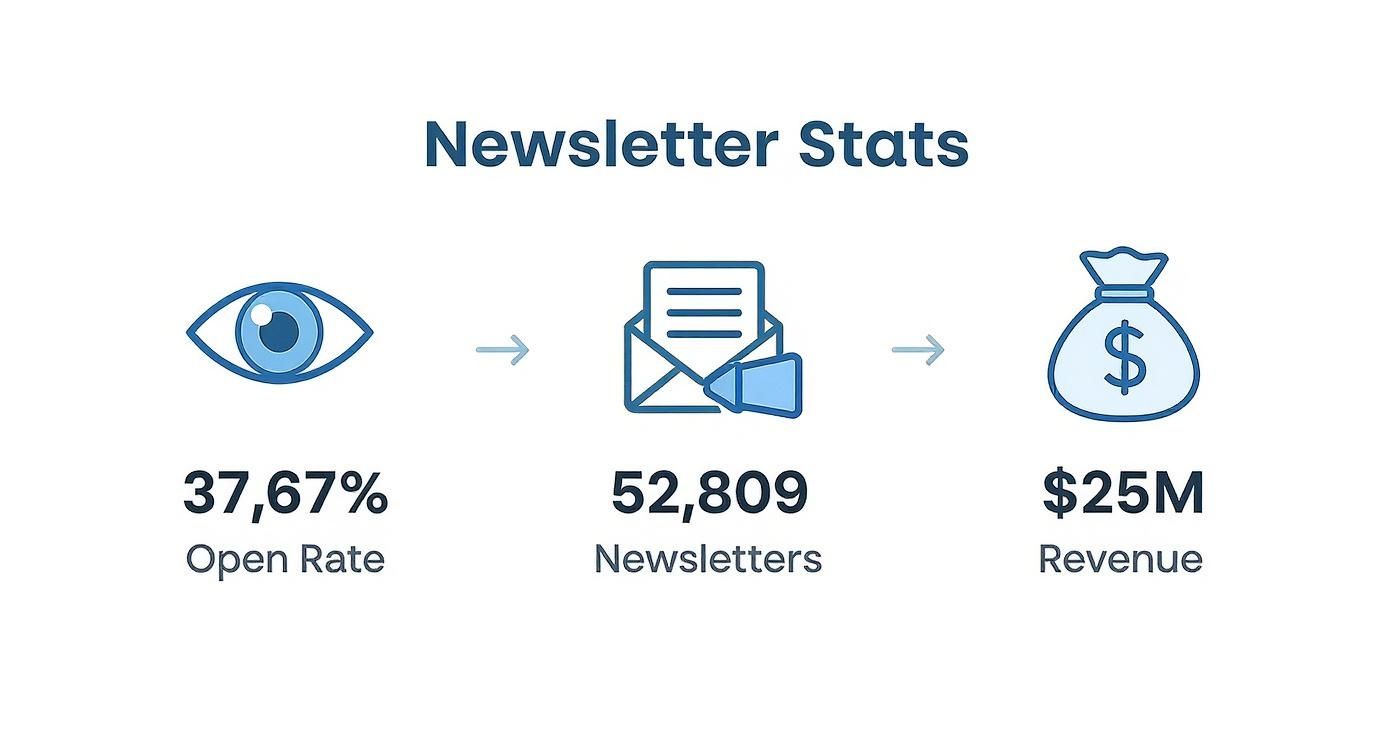
These numbers aren't just for show. Even with more than 52,809 newsletters out there, a huge 37.67% of them get opened. That proves that when you find your people, they listen!
Choosing Your Technology Newsletter Style
Before you pick a final topic, it helps to think about the style of newsletter you want to write. Different types are for different kinds of people. This chart breaks down a few popular ways to do it.
| Newsletter Type | What It Is | Best For Someone Who... | Example Idea |
|---|---|---|---|
| The Collector | A hand-picked list of the best links, articles, and news about one thing. | ...loves to read everything and is great at finding hidden treasures. | "This Week in Cool Robots" |
| The Deep Thinker | One big, smart story about a tricky subject each week. | ...loves to research, has strong ideas, and can explain things simply. | "Why Virtual Reality Feels So Real" |
| The Helper | Easy, step-by-step guides and tips that help people solve a problem. | ...is a natural teacher and loves helping people learn new skills. | "Your First Week Coding" |
| The Insider | Behind-the-scenes news and stories about a specific industry. | ...knows a lot of people or loves digging for stories no one else has. | "What's Really Happening in Schools with Tech" |
Think about which of these feels most like you. Mixing a great topic with the right style is the secret to making something you'll love writing for a long, long time.
Finding Your Special Corner
Once you have a general idea, it's time to zoom in. This is called finding your niche. A niche is just a small, specific corner of a much bigger topic. Getting super specific is what helps you get loyal fans who hang on your every word.
Your niche isn't just what you talk about; it's the special way you see it. It’s the "how" and "why" that makes your newsletter one-of-a-kind.
Instead of being broad, try to be narrow. This makes your technology newsletter feel like a special magazine for a cool club, not just another boring tech update.
- Instead of "Artificial Intelligence," you could focus on "Cool AI Tools for People Who Make Art."
- Instead of "Smartphones," you could zoom in on "How to Shoot Amazing Videos with Your Phone."
- Instead of "Gaming," you could build a community around "The Best Cozy and Relaxing Video Games."
Focusing like this makes it so much easier to come up with ideas and be heard. You become the go-to person for that one thing, building a group of awesome readers who can't wait to see what you share next.
Using AI as Your Creative Partner
Ever stare at a blank page and just... nothing? It’s the worst feeling, especially when you need to create a great technology news letter. But what if you had a super-smart buddy who was always full of ideas and ready to help?
That’s what artificial intelligence (AI) can be for you. It's not some scary robot coming to take over. It's better to think of it as a creative partner—a friend you can brainstorm with who helps you get unstuck and makes your writing even better.
This isn't about letting a computer write your newsletter for you. Your special voice and what you love are what make your writing awesome. Instead, think of AI tools as helpers that do the boring parts, help you organize your thoughts, and give you a little push when you need one.
How AI Can Help You Create
Imagine you need three new ideas for your next newsletter. Instead of spending an hour scratching your head, you can just ask an AI tool like ChatGPT for some suggestions. It can give you a list of ideas in seconds, which gets your own brain buzzing with ideas.
But it can do so much more than just come up with ideas. AI is becoming a favorite tool for creators everywhere. A lot of writers are already using it! About 28% of creators use AI to brainstorm, and 25% use it to help them write stuff. People who use these tools say they save one to three hours every week! That's a huge deal when you're busy. You can find out more about how creators are using AI to make amazing newsletters over at superhuman.ai.
So, how does this actually work? Here are a few easy ways you can use AI as your partner:
- Getting Topic Ideas: Ask for "five fun things to write about electric bikes" and see what it says.
- Making an Outline: Give it your main idea and ask for a simple plan with a beginning, three main points, and an end.
- Fixing Your Writing: Copy and paste a sentence that sounds weird and ask the tool to make it sound clearer and more natural.
- Writing Subject Lines: Tell it the topic of your newsletter and ask for ten catchy email titles to choose from.
Putting AI into Action
Using these tools is as easy as talking to someone. You type a question—called a "prompt"—and the AI gives you an answer. The clearer your question, the better the answer you'll get.
Here's what it looks like inside a popular AI tool, ChatGPT.

It looks so clean and simple, right? It makes it easy to just jump in, start chatting, and get help with your writing right away.
By treating AI like a helper, you free up your brain to focus on what really matters in your technology news letter—your own cool ideas, personal stories, and the connection you build with your readers.
Think of AI as your co-pilot. It handles the map and checks the gauges, so you can focus on flying the plane and enjoying the view. It makes you better, it doesn't replace you.
AI is awesome at doing the boring, repetitive stuff. It can summarize long articles, check your spelling, and even help you say the same idea in a bunch of different ways. This saves you tons of time, letting you put your energy into making your newsletter something people truly can't wait to read.
By working with AI, you can beat writer's block for good. You can make better stuff more often and still sound like you. It’s the perfect team for any creator looking to do something amazing.
Growing Your Audience from Zero
So you’ve made something you're super proud of. It’s full of your best ideas and your personality. But then comes the big, scary question: how do you get people to actually read your technology newsletter?

Starting with zero readers can feel like you're talking to an empty room. But don't worry! This isn't about finding a million fans in one day. It’s about finding your first fan, then the next one, and building a real group of friends one person at a time. The good news? Your future readers are already out there. You just need to know where to find them.
Go Where Your People Are
Instead of trying to get an audience to come to you, go to the places where they already hang out online. Think of it like a food truck. You wouldn’t park it on an empty street, right? You’d drive it to a big festival where hungry people are already walking around looking for something yummy.
Your audience is doing the same thing online. You just have to show up and say hello.
Here are a few great places to start:
- LinkedIn: This is a fantastic place for anything about tech. Share a really interesting idea from your latest newsletter as a post. Ask a smart question to get people talking, and then let them know they can get more cool ideas by subscribing.
- Facebook Groups: Find groups that are all about your special topic. If you write about AI for small businesses, join groups where they talk about that. Be helpful, answer questions, and be a friendly face long before you ever share a link to your newsletter.
- Reddit: Some of the most passionate communities online are on Reddit. Find the groups (called subreddits) that match your topic, join in on real conversations, and only share your newsletter when it’s truly helpful to what people are already talking about.
The most important rule is to give before you take. Share good stuff, be a helpful member of the group, and people will naturally want to know what you're up to.
Make It Easy to Read Anywhere
Here’s a simple truth: your newsletter will probably be read on a phone. The whole world uses phones now, and your writing has to look good on them. This isn't a small thing; it’s everything.
The number of people who could read a technology news letter is gigantic because we're all so connected. By 2025, there will be 7.34 billion people with smartphones. And a huge number of them—about 72.6% of smartphone users—use their phone as their only way to get online. Making your newsletter look great on a small screen is a must-do. You can learn more about global technology usage on sqmagazine.co.uk.
Don’t imagine your reader sitting at a big desk. Imagine them scrolling through their email while waiting for coffee or riding the bus. Your newsletter has to be easy for them to read in that moment.
This means using simple, one-column designs. Keep your paragraphs super short, use big, clear titles, and make sure your words are big enough to read without squinting. Your sign-up forms should also be super easy to fill out with just one thumb.
Build Your First Circle of Fans
Your first 10, 20, or even 50 subscribers will probably be people who already know and trust you. They're your foundation, so don't be afraid to ask them for help.
- Start with Friends and Family: Send a personal message to people you think would really like your newsletter. Tell them why you started it and what they'll get from it.
- Share on Your Social Media: Put up a simple post on your own LinkedIn or Twitter. Let your friends and followers know what you’re doing and why you're so excited about it.
- Add a Link to Your Email Signature: This is a super easy way to let everyone you email know about your new project. It works for you even when you're sleeping!
Your first readers are your most important ones. They believed in you first. Treat them like gold, ask them what they think, and they’ll become your biggest cheerleaders, helping you spread the word.
Simple Ways to Monetize Your Newsletter
You've done the hard part. You’ve built an amazing newsletter that people actually look forward to reading. That’s a huge win. But then a quiet little thought starts to bubble up: Could this actually make some money?
The answer is a definite yes. And the best part? You don’t have to feel like a slick salesperson to do it. Making money from your newsletter isn’t about tricking your readers. It’s about finding simple, honest ways to get paid for the value you're already delivering. You can absolutely earn an income from your technology newsletter without feeling like you sold out.
It all comes down to finding methods that feel right for you and your audience. You don’t need a million subscribers to get started, either. Even a small, dedicated group of fans can be enough to begin funding your work.
Earning with Sponsorships
One of the most direct ways to make money is through sponsorships. Think of it like a local coffee shop paying to put their flyers at the front of a popular bookstore. A brand that fits your newsletter's topic pays you a flat fee to get a mention in one of your issues.
This works beautifully when the sponsor is a natural fit for your audience. If you write about creative software, a sponsorship from a design tool company just makes sense. Your readers discover a cool product, and you get paid for making the introduction. It’s a win-win.
You can charge a flat fee for each sponsored email. For instance, a newsletter with 1,000 subscribers could realistically charge $25 to $50 for a single sponsorship. As your audience grows, so does that number.
Trying Out Affiliate Marketing
Another fantastic option is affiliate marketing. It sounds more complicated than it is. The idea is simple: you recommend a product or service you genuinely use and love, and if a reader buys it through your unique link, you earn a small commission.
Imagine you write a review of a new keyboard you just bought. If you’re part of that company's affiliate program, you can drop in a special link. When someone clicks it and makes a purchase, you get a little kickback at no extra cost to them. It’s like a thank-you from the brand for sending them a new customer.
This whole method is built on trust. Your readers trust your judgment, so it’s critical to only promote things you truly believe in.
Your audience trusts you to be their guide. Affiliate marketing works when you're an honest guide, not a billboard. Only recommend what you would personally suggest to a friend.
Here are a few popular affiliate programs for tech creators to check out:
- Amazon Associates: Perfect for recommending gadgets, books, and just about anything else sold on Amazon.
- ShareASale: A massive network with tons of software and tech companies you can partner with.
- Specific Company Programs: Many tech brands run their own programs, so check the websites of your favorite tools.
Creating a Premium Version
Once you’ve built a loyal following, some of your readers will become true superfans. They love what you do and would happily pay for more of it. This is where a premium subscription comes into play.
You keep your amazing free newsletter going, but you also create a paid version with extra-special content. This could be anything from deep-dive articles and exclusive interviews to a private community chat or early access to your content.
For example, a free version of your newsletter might cover the week’s tech headlines. The paid version, for maybe $5 a month, could include a bonus article that analyzes a single tech trend in much greater detail.
This model lets your most dedicated readers support you directly. It strengthens your community and gives you a predictable, recurring income stream—a fantastic way to support your work for the long haul.
Your Launch Checklist for Starting Today
Feeling that little spark of excitement? Let's make it real. This isn’t some giant, scary plan. It's a simple recipe to get your technology newsletter out into the world, maybe even this weekend.
Think of it like building with LEGOs. You have all the pieces from this guide, and now we're just going to click them together, step by step. No stress, no overthinking—just simple, forward motion. This is your map from a cool idea to hitting "send" on your very first email.
The Pre-Launch Countdown
Before you write a single word, you need a few things ready to go. This is the foundation for your newsletter. Let's make it strong.
- Pick Your Niche: You’ve already thought about this. Now, make a choice. Is it "AI tools for artists" or "The latest in electric scooter tech"? Write it down. Being specific is your best friend.
- Choose a Name: Don't get stuck here for weeks. Pick something simple and clear. "Tech for Creatives" is way better than "The Futurist's Digital Dispatch." Your name should tell people what you're about in a single glance.
- Select Your Platform: Go sign up for an email service. Tools like Substack, Beehiiv, or Mailchimp are awesome for beginners, and many are free to start. This is where you'll actually write and send your emails.
- Create a Simple Sign-Up Page: Your platform will help you do this. It's just a basic web page with one job: getting people to type in their email. Keep it clean, simple, and focused.
Crafting Your First Issue
Okay, your workshop is all set up. Time to build something! Your first issue doesn't have to be perfect, but it does need to be interesting, easy to read, and feel like it came from a real person.
Your first newsletter is a handshake. It’s your chance to say, "Hello, this is who I am, and here's what you can expect from me." Make it warm, welcoming, and valuable.
Here is a super simple plan you can follow for that first email. Just fill in the blanks with your own words and ideas.
- Catchy Subject Line: Something like, "Welcome! Let's Talk About [Your Topic]"
- A Personal Welcome: Start with a quick, friendly "Hello!" and thank them for signing up. Explain in one or two sentences what you're so excited to share.
- Your Main Idea (The Meat): Share one cool story, one helpful tip, or one interesting link. Don't give them too much. Your goal is to deliver one solid piece of awesomeness.
- A Cool Link or Two (The Candy): Find one or two other interesting articles, videos, or tools about your topic. Briefly explain why you thought they were cool.
- A Simple Closing: End with a personal sign-off. Try asking a question to get a reply, like "What's the coolest tech you've seen this week?"
And that's it! You've officially made your first technology newsletter. The last step is the most exciting and the scariest: hit send. It won't be perfect, but it will be done. And from there, you can only get better.
Common Questions About Tech Newsletters
Jumping into something new always brings up a few questions. That's a great sign—it means you're thinking! Here are some quick answers to the things people usually ask when starting a technology newsletter.
We’ve kept it simple to give you a little boost of confidence to just get going.
How Often Should I Send My Tech Newsletter?
Being consistent is way more important than being frequent. Think of it like a favorite weekly TV show—you know exactly when it's on. A weekly or bi-weekly (every two weeks) schedule is a great place to start.
Sending it weekly keeps you fresh in your readers' minds. Sending it every two weeks gives you a little more breathing room to make something really great. Just pick a schedule you know you can stick with, without getting stressed out or tired.
Do I Need to Be a Tech Expert?
Nope, not at all. In fact, sometimes it's better if you aren't. Your job isn't to be the smartest person in the room; it's to be a curious guide for your audience. You're exploring the cool, confusing, and exciting parts of tech right there with them.
People really connect with real excitement and a fresh way of looking at things.
Your unique voice and curiosity are way more valuable than a long list of credentials. Just share what you find interesting, and the right people will be excited to learn with you.
Your passion is what will make your newsletter a must-read, not some fancy title.
How Long Should My Newsletter Be?
Aim for a quick five-minute read. Everyone is busy, so your newsletter should feel like a yummy snack, not a giant three-course meal. Most newsletters are between 500 and 1,500 words long.
The key is making it easy to skim. Use clear headlines, very short paragraphs, and a picture or two to break up the words. Your goal is to give a quick burst of awesome that leaves your readers feeling a little smarter, not tired from reading a wall of text.
What’s the Best Way to Get My First 100 Subscribers?
Your first fans are usually closer than you think. Start with the people who already know and like you.
- Tell Your Friends: Reach out to friends, family, and coworkers who might really be interested. A personal message works wonders.
- Post on Social Media: Share a post on your personal LinkedIn or other social accounts. Let people know what you're building and why you're so excited about it.
- Join the Conversation: Find online groups on places like Reddit or Discord where people are already talking about your topic. Be helpful first, and only share your newsletter when it truly adds something to the chat.
Think of your first 100 subscribers as your founding members. They believed in you from day one and will often become your biggest cheerleaders, helping you spread the word.
Ready to make sure your expertise gets seen and heard by the right people? Authority Echo helps you become the "best answer" across search engines and AI assistants. We'll perform a free visibility audit to show you exactly how AI and search engines see your brand right now. Get your free visibility audit at Authority Echo.